Wednesday, September 10, 2008

Europe Should Beware that its Endorsement of EURObama is as Good as a 'Pig in a Poke'

The following blog entry should be read with the expression, 'A Pig in a Poke', in mind. A very old expression, a 'Pig in a Poke' means:


"An offering or deal that is foolishly accepted without being examined first...'Don't buy a pig in a poke' might seem odd and archaic language. It's true that the phrase is very old, but actually it can be taken quite literally and remains good advice. The advice being given is 'don't buy a pig until you have seen it'. This is enshrined in British commercial law as 'caveat emptor' - Latin for 'let the buyer beware'. This remains the guiding principle of commerce in many countries and, in essence, supports the view that if you buy something you take responsibility to make sure it is what you intended to buy."

"A poke is a small sack or bag and is the origin of the word pocket. The word is still in use in several English-speaking countries, notably Scotland and USA. A poke is just the sort of bag that would be useful for carrying a piglet to market. A pig that's in a poke may turn out to be no pig at all. If a merchant tried to cheat by substituting a lower value animal, the trick could be uncovered by letting the cat out of the bag. The advice has stood the test of time and people have been repeating it for getting on for five hundred years, maybe longer. Fraser's Magazine (1858) reprinted a piece from Richard Hill's (or Hilles') Common-place Book, 1530, which gave this advice to market traders: "When ye proffer the pigge open the poke."

[See: Pig in a Poke, Phrasefinder at: http://www.phrases.org.uk/meanings/282900.html ].


[IF THIS IS SO, WHY THEN DOESN'T BRITISH PRIME MINISTER GORDON BROWN FOLLOW HIS COUNTRY'S OWN ADVICE??? HIS FAILURE TO DO SO MAY PERHAPS BE THE REASON WHY HIS POLL NUMBERS ARE SO LOW!]
------------------------------------------------------------------------------------------------

[EURObama Returns From His European Vacation With A New European Family?


Poll: US-Europe relations need Obama


Yahoo News

By Alexander Burns
Wed Sep 10, 9:26 AM ET
By significant margins, Europeans have high hopes for a potential Obama administration, according to a Transatlantic Trends poll of 12 European countries.

Forty-seven percent of Europeans believe an Obama victory in November would lead to a better relationship between the United States and Europe, versus just 5 percent who think Obama would weaken the trans-Atlantic relationship

[AND, THE U.S. BLUE PARTY MUST BELIEVE THAT THE EUROPEAN UNION'S SUPPORT FOR OBAMA IS NECESSARY IN ORDER FOR HIM TO WIN THE U.S. PRESIDENTIAL ELECTION. See: Eurobama Seeks Support From Green EU Social Welfare Regulatory State to 'Change' America, ITSSD Journal on Pathological Communalism at: http://itssdpathologicalcommunalism.blogspot.com/2008/08/eurobama-seeks-support-from-green-eu.html ].

By comparison, only 11 percent think Sen. John McCain would strengthen European-American relations if he were elected president. More than half of respondents said a McCain administration would keep relations between the United States and Europe in roughly the condition they are now.
The poll, commissioned by the German Marshall Fund and conducted by the firm TNS Opinion from June 4-28, queried at least a thousand respondents in each of a dozen countries, including Germany, France, Poland, Slovakia and Turkey.


The survey’s release Wednesday follows the news of a BBC poll, conducted by the GlobeScan service and published Tuesday, showing that in 17 of 22 nations tested, respondents across the globe expected an Obama win would improve American relations with the rest of the world. [AT WHAT COST - LOSS OF AMERICAN'S CONSTITUTIONAL RIGHTS???]

It also comes on the heels of a report Tuesday that Gordon Brown, the British prime minister, intends to publish a column praising Obama’s response to the troubled real estate market. In an unorthodox step for a foreign leader, Brown is expected to argue: “In the electrifying U.S. Presidential campaign, it is the Democrats who are generating the ideas to help people through more difficult times.”

[ARE THESE THE IDEAS THAT PRIME MINISTER BROWN IS REFERRING TO?? IN OTHER WORDS, IS GORDON BROWN, WHO DISPENSED WITH THE NEED TO HOLD A PUBLIC PLEBSCITE ENTITLING BRITISH CITIZENS TO VOTE ON WHETHER THE UK SHOULD RATIFY THE EU CONSTITUTION, BECAUSE HE KNEW WHAT WAS BEST FOR THEM, OF THE SAME MIND AND SPIRIT AS BARACK OBAMA AND HIS LIBERAL DEMOCRATIC ELITES, WHO BELIEVE THAT LIBERAL 'CHANGE', CONSISTENT WITH EUROPE'S IDEAS FOR CENTRALIZED WELFARE STATE BUREAUCRACY, GLOBAL GOVERNANCE, AND LOST NATIONAL SOVEREIGNTY, IS IN THE BEST INTERESTS OF ALL AMERICANS??]

[See: UK Labor Party Willing to Give-Away Country's Sovereignty to EU; Does the US Democratic Party Wish to Do the Same for America??, ITSSD Journal on Pathological Communalism, at: http://itssdpathologicalcommunalism.blogspot.com/2008/04/uk-labor-party-willing-to-give-away.html .]

[See: Charting The Evolution of the Berlin-Paris-Brussels 'Homo Bureaucrat Federalis', ITSSD Journal on Economic Freedom, at: http://itssdeconomicfreedom.blogspot.com/2008/08/charting-evolution-of-berlin-paris.html ].


[See: Gordon Brown Wants 'Next' Democratic President to Submit America's Unique Constitution and National Sovereignty to Global Governance (UN/EU) Override, ITSSD Journal on Economic Freedom, at: http://itssdeconomicfreedom.blogspot.com/2008/04/gordon-brown-wants-next-democratic.html ].

According to the Transatlantic Trends report, Brown’s upbeat assessment of the Democratic presidential nominee is shared by the majority of his country: 75 percent of British respondents said they had a favorable or very favorable opinion of Obama.

Among Europeans more generally, that number was only slightly lower: 69 percent said they had a favorable impression of the Illinois senator.


[AMERICANS, LIKE THE IRISH, SHOULD DO WHAT EUROPEANS WANT, NON?]


[See: The Irish People Have Spoken: NO EU TREATY; EU Commission & US Democratic Congress BEWARE!!, ITSSD Journal on Economic Freedom, at: http://itssdeconomicfreedom.blogspot.com/2008/06/irish-people-have-spoken-no-eu-treaty.html ].


[See: What Aspect of the Irish 'NON' Do the Brussels & Paris Philosopher Kings Not Understand?, ITSSD Journal on Economic Freedom, at: http://itssdeconomicfreedom.blogspot.com/2008/07/what-aspect-of-irish-non-do-brussels.html ].


McCain’s favorability ratings are considerably lower, with just 26 percent of Europeans giving him the thumbs up. He is also significantly less well-known than Obama: 29 percent of respondents did not render an up-or-down judgment on the Republican nominee, compared with just 19 percent who had no impression of Obama.

It is hardly shocking that Obama would be better liked in Europe than his opponent, given that McCain is a member of the same political party as President Bush.

[IN OTHER WORDS, SINCE OBAMA AND PRIME MINISTER GORDON BROWN ARE ESSENTIALLY OF THE SAME POLITICAL PARTY, IT IS HARDLY SHOCKING THAT McCAIN IS LESS LIKED BY THE LABOR PARTY IN BRITAIN AND BY OTHER GREEN & SOCIAL[IST] DEMOCRATIC PARTIES IN CONTINENTAL EUROPE].

The president has consistently received dismal poll ratings from abroad, and in 2004 a GlobeScan survey showed Europeans favored the election of Sen. John F. Kerry by similarly wide margins — 74 percent to 7 percent in Norway, 74 percent to 10 percent in Germany and 64 percent to 5 percent in France.

[IS THIS WHAT KERRY HAD PLANNED AND OBAMA NOW CONSIDERS? ECO-TOWNS? See: Gordon Brown Gives New Meaning To Marxist Central Planning in British Eco-Towns, ITSSD Journal on Economic Freedom, at:

It is also no surprise that Europeans would be more familiar with Obama than with McCain. In late July, Obama toured several European nations as part of a weeklong trip [EUROPEAN VACATION] abroad, giving a speech in Berlin that attracted an audience in the hundreds of thousands.


Yet even as the Transatlantic Trends poll highlights Obama’s popularity in Europe, it outlines some of the diplomatic hurdles that any American president will face, regardless of party.


While 80 percent of Americans call it very or somewhat desirable for the United States to “exert strong leadership in world affairs,” just 33 percent of Europeans say the same. A quarter of European respondents called an assertive United States “very undesirable.”

[THIS CLEARLY REFLECTS EUROPE'S PREDICTION: AN OBAMA PRESIDENCY WOULD WEAKEN U.S. SOVEREIGNTY, STRENGTH & INFLUENCE ABROAD.]


While a majority of Europeans — 55 percent — said the United States and the European Union have close enough values to make diplomatic cooperation possible, they’re still less confident about it than Americans, 67 percent of whom said the United States and the EU could tackle international issues together.


And some persistent diplomatic disagreements, such as resolution of the Israeli-Palestinian conflict, also remain: Europeans expressed considerably less positive feelings about the state of Israel than did Americans.

-----------------------------------------------------------------------------------------------
[IS GORDON BROWN VYING TO SERVE AS OBAMA'S EUROPEAN MENTOR? AND, IS THIS THE TYPE OF CENTRAL PLANNING THAT OBAMA HAS IN MIND??]


[See Also: Brown's 'Get Fit' Towns: Kim Jong-il Would Be Proud, ITSSD Journal on Economic Freedom, at: http://itssdeconomicfreedom.blogspot.com/2008/01/browns-get-fit-towns-kim-jong-il-would.html ].


[See: Gordon Brown Gives New Meaning To Marxist Central Planning in British Eco-Towns, ITSSD Journal on Economic Freedom, at:
http://itssdeconomicfreedom.blogspot.com/2008/03/httpnews.html ].

-----------------------------------------------------------------------------------------------

Gordon Brown's futuristic eco-towns to fine residents for driving out of city limits


By Jill Sherman


UK Timesonline

June 17, 2008


Motorists living in Gordon Brown's futuristic green communities face fines for driving their cars out of town, under radical proposals being drawn up by ministers, The Times has learnt.

Residents of the largely pedestrianised eco-towns may also be expected to park their cars at the outskirts and walk or cycle to their homes, up to ten minutes away.


These are among possible ways being discussed with ministers to meet a government target to cut car use in eco-towns by half. Detailed planning proposals will be published next month, a senior Whitehall official said.


The proposals could include a fee for a permanent car space at the edge of town, charges for driving out at peak congestion times, or penalties for taking a car out of town above a set number of agreed journeys.


The official emphasised that the rules would be adapted for more rural areas, where there was less public transport. “But outside Cambridge or near Stansted airport, for example, where there are strong transport links, you could be charged for driving out [of the eco-town],” the official said.


The proposals, which are also being discussed with developers, are part of a plan to cut carbon emissions within up to ten eco-towns to be built from 2013. They are also key to the Prime Minister's ambition to build three million new homes by 2020, 30 per cent of which will be affordable.


The towns of between 5,000 and 20,000 homes each will be mainly pedestrianised, with cycle lanes and a few highways with limits of 15mph (24km/h). The houses, built on narrow lanes, surrounded by gardens, parks and waterways, will have no garages or parking spaces — just a cycle rack, under plans modelled on European schemes, such as Vauban, a neighbourhood in Freiburg, Germany.


Town plans will differ, but most shops, schools and GP surgeries will be within walking or cycling distance. People usually reliant on cars will have a far more difficult journey — walking to the edge of towns to get their car, driving it back to pick up shopping, with few parking spaces available, unloading at home and then taking the car back to the edge.

A free minibus will tour round the high streets to shops, schools and GPs' surgeries and stop within five minutes' walk of every home. Residents will be able to consult in their homes an electronic board, which displays bus times and flashes an alert when one is approaching.


Fifteen potential sites have been shortlisted, including Pennbury, Leicestershire; Hanley Grange, Cambridgeshire; Weston Otmoor, Oxfordshire; and Ford, West Sussex. A final list of up to ten will be announced in October, with five to be built by 2016.


Each town is expected to be carbon-neutral, but the Government has bowed to developers' concerns that the highest criteria (Level 6) for zero-carbon homes could add £30,000 to building costs. Caroline Flint, the Housing Minister, told The Times yesterday that, until 2016, the new homes could be built at the much lower Level 3, provided that this was balanced by other energy reducing measures. “We are in negotiations with developers and hope many of them will go further,” she said.


She admitted that the key to the design would be the ability to plan towns with walkways and cycle paths, so that cars would be used less. “It's not about banning cars, but about reducing reliance on cars,” Ms Flint said.


Other “eco-measures” include plans to install underground vacuum recycling, where residents have chutes for different types of waste, which is then automatically taken to a recyling centre on site. Solar panels and wind turbines will be used for power, as well as biomass boilers, fuelled by wood chips from the surrounding forests. Electric vehicles charged from shops and schools would also be encouraged.


Most of the 15 shortlisted areas were put forward by developers, and there has been widespread opposition by councils and residents, who claim that the towns are an excuse for sprawling developments to meet a housing shortage. The first consultation period for the 15 ends in two weeks and residents are planning protests. Some claim that the carbon emissions produced to build the towns will outstrip the benefits, while others fear that they will be marooned on car-free campuses built on greenfield sites.


Glimpse of [CENTRAL GOVERNMENT CONTROLLED BUREAUCRATIC] future

— Penalties for cars driving out of eco-towns in peak times and exceeding journey limits
— Electronic noticeboards in homes to give bus times and locations
— Wood from local forests will be used to fuel biomass boilers
— Recycled waste will be processed underground after being sorted in household chutes
— Residents with electric cars will be able to charge their vehicles in shops and schools

Friday, August 29, 2008

Psychoanalyzing the Great Obama: Messiah or Empty Suit?

Messiah or Macbeth?


By Robert Stein, Ph.D.

Messiah or empty suit? Rarely do politicians exclusively fit into one of these categories. In many respects, Barack Obama is unlike any recent American presidential candidate. Aside from his obvious mixed racial ancestry, one has to return to the early days of the republic to find someone with so varied an early developmental history in non-traditional American settings. Yet, his chaotic childhood is quite similar to that of Bill Clinton. Both lost fathers, both were very close to their mothers and both had step-fathers who were less than stellar father substitutes. Both were academic overachievers and both have an ability to connect with people.

But whereas Clinton had a relatively stable geographic residence, Obama lacked that until later in his childhood. Whereas Clinton’s identity as a white southerner was incontrovertible, Obama was essentially a black face in a white home. His mother’s frequent travels, had a profound impact on the development of his identity and contributed to his chameleon-like belief system.

Obama, lacks a solid internal figure of both his father and mother. Although he speaks glowingly of his mother, as with many children with absent parents, they tend to hold idealized images which are out of sync with reality. Lacking internal parent images (he admits his conflicted feelings for his grandparents[1]), he relies on others to firm up his own identity. Despite a commitment to radical leftist ideas from early adulthood, he has easily jettisoned the more obvious external trappings when his candidacy became viable.


Charles Steele Jr. of the Southern Christian Leadership Conference lamented that Obama lacked “slave blood” early in the campaign. This ironic twist highlighted initial opposition by the African-American establishment. If elected, Obama will owe much to the near unanimous support of the American black community. Yet, his early childhood and adolescent environment bears little resemblance to those of multi-generational inner-city African-Americans. Although his commitment to leftist causes protected him from being called an oreo, it might be more appropriate to describe Obama as “cookies & cream” - mostly white, with chunks of black tossed in.

In his writings, he yearns for a link to his father’s African ancestry, a link he will never achieve. In fact both his African and African-American identities have been painstakingly constructed and emerged out of his adolescent rebellion against a white grandfather who he admits didn’t understand him[2]. As an impressionable young man still searching for a nurturing father substitute, he began attending Rev. Wright’s church with its leftist Liberation Theology. For 20 years, Wright participated in all of Obama’s important family events. He even provided the inspiration for Obama’s book, “The Audacity of Hope”. In “Dreams From my Father” he quotes Wright’s statement “white folks greed runs a world in need[3]”. Ironically he cannot exclude himself from that condemnation. If not for his marriage to a genuine African-American he would have difficulty claiming to be one.

This conflict goes to the heart of his identity confusion reflected in the inexorable belief that he, rather than the policies he advocates or the actions he takes, is “the bridge” between black and white. Yet bridges, suspended as they are between two summits, cannot claim firm allegiance to either side, while constantly in danger of collapsing into the gulf they span. They are always alone.


Those of us more concerned with the substance of Obama’s positions than the romance of his quest, are inevitably disappointed by his speeches. It is unlikely this will change. On the one hand, Obama knows his radical views are not held by a majority of American voters, so he dare not explicitly state them. On the other, he is reluctant to firmly lock himself into a position, because ultimately he isn’t entirely sure what he truly believes.


This is an essential component of Obama’s repeated attempts to lecture from both sides of an issue. Being far more polished and poetic than John Kerry, he never uses such oxymorons as, “I voted for it, before I voted against it.[4] He will, as he did in his acceptance speech, advocate 2nd Amendment gun rights, while simultaneously emphasizing the need for gun control[5] or endorsing a death penalty moratorium while criticizing the Supreme Court ruling barring the death penalty for child rapists[6].


All of this contributes to an amazing tone-deafness, to which his true believers are blind. Being himself the “bridge” and the “channel” by which racial harmony will appear, he sees himself as exempt from the usual rules. Accused of being a “rock star”, he simply dismisses the charge while giving his convention speech in a rock star venue, with the trappings of a Greek temple.
Accused of lacking substance in his proposals, he gives an acceptance speech high on drama, high on visual effects, high on image and short on specifics, while decrying his opponent for daring to challenge him on being short of specifics.


Predicting people’s behavior is a difficult proposition even with an established prior history of conduct. Obama’s responses have to give even the most seasoned observer pause as to how he will react in the meat grinder of the presidency. Politician’s can be notoriously sociopathic and superficial. But in Obama’s case he appears to lack some of the more protective features associated with being calculating.


The outcome of close elections often hinges on intangibles and external events. Obama may win. However, once in office, he will initially be a president who is repeatedly outmaneuvered by both political allies and opponents. After all, “the devil is in the details”. But, given his lack of an underlying identity and the centrality of a belief in himself as icon, there is no way to predict what final form his mission will take. It might be quite a surprise to even his most ardent supporters.

APOLLOBAMA, PATRON GOD OF THE ARTS, THE GIFT OF PROPHECY ('CHANGE'), HEALING & CLEANSING IS DELIVERED TO BLUE PARTY ON TEMPLE MOUNT

http://www.dailymail.co.uk/news/worldnews/article-1050017/Obama-God-Democrats-build-temple-Barack.html

Obama God! Democrats build a temple for Barack

By Peter Mckay In Denver


Times UK


29th August 2008


Barack Obama was mocked in the American press yesterday for making the most important speech of his life on a set decked out like an ancient temple.


Finally nominated as the first black candidate for the U.S. presidency, he moved the Democratic Party Convention from the conference hall to an 80,000-seater football stadium for his landmark address.


His challenge was to turn his trademark soaring rhetoric into simple ideas to improve the lives of hard-pressed American families. But the Greek pillars of his backdrop prompted ridicule before he stood up to speak early today.

The New York Post portrayed him mocked up in the style of Frankie Howerd's toga-clad TV romp Up Pompeii!, threatening to tip this historic moment into bathos - the Greek term for dignity descending into farce.


And rival John McCain's camp was quick to make more fun of him. Republican spokesman Danny Daz called the set - designed by Britney Spears's concert team - 'the Temple of Obama' and observed sarcastically: 'It's only appropriate that Barack Obama would descend from the Heavens and spend a little time with us mere mortals.' [YES WE CAN!]


Held at Denver's Invesco Field stadium at Mile High, home of the Denver Broncos, the extravagant event before a full audience and tens of millions of TV viewers was also to feature performances by Stevie Wonder and Sheryl Crow.


American Idol contestant Jennifer Hudson was to sing the national anthem.


Democrats wondering if the kitsch setting wasn't a mistake are comforted by the thought that John F Kennedy's nomination acceptance event was held at the Los Angeles Coliseum, and it too was ridiculed.


Party officials fearing what Americans might think of 'Obamapolis' say privately that it was dreamed up before his recent 'rock star' visit to Berlin, where he drew a crowd of 200,000 - and Republican criticism for being out of touch with ordinary Americans.


Had they anticipated that, the affair in Colorado would have been more low-key.


McCain's set next week in St Paul, Minnesota, is stark by comparison: He'll speak before a giant stars and stripes.


But for Obama, the Greek columns had a twin appeal: his speech came 45 years to the day since civil rights leader Martin Luther King Jr's historic 'I have a dream' address at the Lincoln Memorial in Washington, which also boasts Greek pillars. And Lincoln is America's favourite president - especially for blacks, whom he released from slavery.


With Americans proving resistant to Obama's appeal, his task was to pull off a speech with the same historic impact as Lincoln's Gettysburg Address, while addressing the 'kitchen table' concerns that voters are worrying about.


Obama seeks to stand up for what are called the 'middle classes' - what in Britain we would call the hard-working poor. He promises to turn the economy around and make the nation safer.
But his grandiose style lends itself to accusations of hubris - the Greek word for pride before a fall - and he was advised to keep things simple as he made an impassioned call for change. [YES WE CAN!]


However, Obama also had to top Bill Clinton's barnstorming performance on Wednesday night.
The former president, who had described Obama privately as 'a roll of the dice' as a presidential prospect, now oozed warmth for Barack - far more so than wife Hillary the night before.

------------------------------------------------------------------------------------------------

http://abcnews.go.com/Politics/wireStory?id=5660266


Obama Speech Stage Resembles Ancient Greek Temple


ABC News


August 26, 2008


DENVER (Reuters) - Democratic presidential candidate Barack Obama's big speech on Thursday night will be delivered from an elaborate columned stage resembling a miniature Greek temple.

------------------------------------------------------------------------------------------------


http://www.hikenow.net/GreekGodApollo-Delphi.html

THE SANCTUARY OF APOLLO - DELPHI


http://www.in2greece.com/english/historymyth/mythology/names/apollo.htm

APOLLO, THE GREEK GOD

"[Greek] Patron god of the Arts, the gift of prophecy and also connected with light (which in Greek also can be translated illumination). ['THE ONE'] He was born on the island Delos by Leto, a Titan's daughter, and Zeus. The island was to be the most sacred of islands, and ruins of many temples can still be seen there. His sister was Artemis, the goddess of hunting and protecter of young women.

After he killed the huge snake Python [HILLARY CLINTON] in Delphi by the mountains Parnassus, the site was dedicated to him. There, the Omphalos, the navel, stood - a point believed by the ancient Greeks to be the centre of the earth. [DENVER MILE HIGH STADIUM] His oracle there was a place many people, commonmen and rulers, came to consult the priestess, Pythia, [MICHELLE OBAMA?] about their future."


"...In many ways, Apollo personified the perfect man according to ancient Greek standards: he would entertain the other gods by playing the lyre, and he was also a brilliant archer and runner, considered to be the first winner at the Olympic Games. He protected young men, was a god of agriculture and also was a healer. He was also thought to be the most beautiful of gods."


"...Apollo can easily be considered one of the most important gods in Greek mythology. Seven was Apollos holy number, and he was connected to the calendar. The tripod was one of his symbols, and he was often referred to as Phoibos = the cleanser."

Friday, June 27, 2008

Does EURObama Share Francis Bacon's & Spain's Surreal Passion for Animal Rights? Will Great Apes Be Entitled to Universal Healthcare in America?

http://www.guggenheimcollection.org/site/artist_work_md_10_4.html


Guggenheim Museum on Francis Bacon's Passion for the Apes


Study for Chimpanzee, March 1957


"Although Francis Bacon is best known for his alienated and often hideously distorted human figures, animals are the subject of at least a dozen of his canvases. He rarely worked from nature, preferring photographs, and for images of animals he often consulted Eadweard Muybridge’s Animals in Motion, Marius Maxwell’s Stalking Big Game with a Camera in Equatorial Africa, and pictures from zoological parks. Intrigued by the disconcerting affinities between simians and human beings, he first compared them in 1949 in Head IV (Man with a Monkey) (formerly Collection Geoffrey Gates, New York), in which a man’s averted face is concealed by that of the monkey he holds.


Like his human subjects, Bacon’s animals are shown in formal portraits or candid snapshots in which they are passive, shrieking, or twisted in physical contortions. The chimpanzee in the Peggy Guggenheim work is depicted with relative benevolence, though the blurring of the image, reflecting Bacon’s interest in frozen motion and the effects of photography and film, makes it difficult to interpret the pose or expression. In composition and treatment it is close to paintings of simians executed in the fifties by Graham Sutherland, with whom Bacon became friendly in 1946. The faint, schematic framing enabled Bacon to “see” the subject better, while the monochrome background provides a starkly contrasting field that helps to define form." (See: Guggenheim Museum Francis Bacon Collection, supra.


------------------

[ IS THERE REALLY MORE HERE THAN MEETS THE EYE??]


Man with a Monkey 1949 Francis Bacon
(For information about surrealist artist Francis Bacon, See: Francis Bacon, Gay Guys into Art History, at:


"What Bacon’s painting constitutes is a zone of indiscernibility, or undecideability between man and animal. Man becomes animal, but now without the animal becoming spirit at the same time, the spirit of man, the physical spirit presented in the mirror as Eumenides or Fate. It is never a combination of forms, but rather the common fact: the common fact of man and animal. Bacon pushes this to the point where even his most isolated figure is already a coupled figure, man is coupled with his animal in a latent bullfight. This objective zone of indiscernibility is the entire body, but the body insofar as it is flesh or meat...The painter is certainly a butcher, but he goes to the butcher's shop as if it were a church, with the meat as the crucified victim (the Painting of 1946). Bacon is a religious painter only in butcher's shops." Gilles Deleuze, Body, Meat, Spirit; The Logic of Sensation, Continuum, 2004." See: Art Gallery of Alex Alien, at:

------------------

"...Likewise, in 'Figure With Monkey' from 1951, a man and monkey are separated by a fence painted from a blur of diagonal hatching marks in brilliant purples and deep blues. The man reaches up for the animal, and the hand and mouth meet in a confusing few swaths of fleshy colored paint. Is this gentle touching or biting? And, for that matter, who is caged, man or monkey?" (See: Screaming in Paint - Exhibit Plumbs Depths of Bacon's Unsettling Works, By MARY LOUISE SCHUMACHER mschumacher@journalsentinel.com
Posted: Jan. 26, 2007), at: http://www.jsonline.com/story/index.aspx?id=557375 ).

----------------------

Head I, 1948


"Bacon was an apolitical, good-for-nothing gambler with no principles to blind him to reality. And that is why it fell to him to acknowledge the real meaning of the atrocities whose photographic evidence appeared all over the world with the defeat of Germany. At the time he painted Head I, in 1948, 'responsible' people were busy separating the depravities of Auschwitz from accounts of mass murder inside the USSR. Humanism was still the watchword of the left. So here, in Bacon's appalling painting, is what he thought of humanism: a disintegrated face fused with the baying head of a baboon. There is little point in wallowing in the brilliance of Bacon if you don't recognise him as a moralist first and last. The way Head I is painted brings me out in goosebumps: the pleasure of this horror is immense. A matted blackness, a congealed, cloacal texture of extruded pigments, creates the picture's claustrophobia. The thin transparent veil of purple flesh that hangs in this darkness seems caught at the moment of explosion, in the instant it evaporates... We must learn to love the mortal monkey. What is the alternative? " Jonathan Jones, The beast within; The Guardian, Tuesday August 9, 2005. (See Art Gallery of Alex Alien, supra.)

---------------------------------

Study for a Chimpanzee 1957


"There's a picture of a screaming chimpanzee - a simian form with bared mouth - that goes to the core of Bacon's work. If you then look at Head 1 from 1948 and Head 2 from 1949, say, both are half-animal, half human, as if morphing between forms. There was no difference to Bacon. He knew humans were animals: primal and confrontational. You see it also in his figures of screaming popes. He always saw the animal in man, even in in the supreme pontiff. There's that ambiguity with Bacon: you don't know if you're witnessing a scream of pain, anger or release. I think probably that's why Bacon was such a great artist.." Michael Peppiatt, Great British Bacon, Radio Times, 19-25 March, 2005. (See: Art Gallery of Alex Alien, supra).


------------------------------------------------------------------------------------------------
Obama Pledges Support for Animal Rights


By AP/NEDRA PICKLER


TIME/CNN


Jan. 16, 2008

(HENDERSON, Nev.) — Democrat Barack Obama says he won't just be a president for the American people, but the animals too.


"What about animal rights?" a woman shouted out during the candidate's town hall meeting outside Las Vegas Wednesday after he discussed issues that relate more to humans, like war, health care and the economy.

Obama responded that he cares about animal rights very much, "not only because I have a 9-year-old and 6-year-old who want a dog." He said he sponsored a bill to prevent horse slaughter in the Illinois state Senate and has been repeatedly endorsed by the Humane Society.

"I think how we treat our animals reflects how we treat each other," he said. "And it's very important that we have a president who is mindful of the cruelty that is perpetrated on animals."
------------------------------------------------------------------------------------------------


Barack Obama - Animal Welfare Advocate

While speaking in Henderson, Nevada, Democrat Barack Obama says he won't just be a president for the American people, but the animals too. "What about animal rights?" a woman shouted out during the candidate's town hall meeting outside Las Vegas after he discussed issues that relate more to humans, like war, health care and the economy.

Obama responded that he cares about animal rights very much, "not only because I have a 9-year-old and 6-year-old who want a dog." He said he sponsored a bill to prevent horse slaughter in the Illinois state Senate and has been repeatedly endorsed by the Humane Society. "I think how we treat our animals reflects how we treat each other," he said. d it's very important that we have a president who is mindful of the cruelty that is perpetrated on animals." as reported by Associated Press.

Indeed, Senator Barack Obama pledges support for nearly every animal protection bill currently pending in Congress, and he says he will work with executive agencies such as the U.S. Department of Agriculture to make their policies more humane. He has written and spoken of the important role animals play in our lives, as companions in our homes, as wildlife in their own environments, and as service animals working with law enforcement and assisting persons with disabilities.

Obama also comments on the broader links between animal cruelty and violence in society:

"I've repeatedly voted to increase penalties for animal cruelty and violence and, importantly, to require psychological counseling for those who engage in this behavior as part of the punishment. In addition to being unacceptable in its own stead, violence towards animals is linked with violent behavior in general, especially domestic violence, and we need to acknowledge this connection and work to treat it. Strong penalties are important and I support them, but we know that incarceration alone can't solve all our problems. As president, I'd continue to make sure that we treat animal cruelty like the serious crime it is and address its connection to broader patterns of violence."
During Barack Obama’s eight years as an Illinois state senator he voted in favor of at least twelve animal protection laws.

These included state legislation to:

- allow creation of pet trusts to provide for long-term care of companion animals;
- to upgrade penalties for cruelty to animals, to require psychological counseling for people who abuse animals;
- to require veterinarians to report suspected acts of cruelty and animal fighting;
- to ban slaughter of horses for human consumption—significant because Illinois was one of only two states (with Texas) where horse slaughter plants operated;
- to create additional restrictions to make it more difficult for puppy mills to operate.
He voted to end the federal funding of horse slaughter in 2005, and he is currently a co-sponsor of new legislation to stop horse slaughter and the export of horses for human consumption.

He co-sponsored legislation to upgrade the federal penalties for dogfighting and cockfighting, and he is a co-sponsor of new legislation to ban the possession of fighting dogs and being a spectator at a dogfight.

He signed a letter requesting increased funds for the enforcement of the Animal Welfare Act, Humane Methods of Slaughter Act, and the federal animal fighting law, and he also sent a letter to the National Zoo expressing his concern for the care of Toni the elephant.

He has joined the fight against puppy mills, and appears in A Rare Breed of Love: The True Story of Baby and the Mission She Inspired to Help Dogs Everywhere ,a new book by Jana Kohl about her rescued dog, Baby, who survived a decade in a puppy mill.

And Obama has said that "as a condition for letting me run for President, my daughters Malia and Sasha extracted a promise from Michelle and I that they could get a dog after the election, win or lose. So they're heavily invested in this campaign, if only for it to be over so we can get our dog."
------------------------------------------------------------------------------------------------

The Presidential Files: Barack Obama and the Dog-acity of Hope

Democratic Senator Barack Obama's 2006 book, "The Audacity of Hope," is a story about his dogged optimism in the future. But it's his other work of writing—this one in response to a Humane Society Legislative Fund questionnaire—that has given dogs and other animals hope in this country.

At this time, three other presidential candidates—John Edwards, Dennis Kucinich, and Bill Richardson—have issued campaign statements telling voters where they stand on animal welfare. Obama's statement is a welcome addition, and it is an indicator of the growing importance of humane issues in presidential politics. We hope the other presidential candidates will let voters know where they stand on animal issues, too.


In his questionnaire response, Obama pledges support for nearly every animal protection bill currently pending in Congress, and he says he will work with executive agencies such as the U.S. Department of Agriculture to make their policies more humane. He writes of the important role animals play in our lives, as companions in our homes, as wildlife in their own environments, and as service animals working with law enforcement and assisting persons with disabilities.


Obama also comments on the broader links between animal cruelty and violence in society: "I've repeatedly voted to increase penalties for animal cruelty and violence and, importantly, to require psychological counseling for those who engage in this behavior as part of the punishment.

In addition to being unacceptable in its own stead, violence towards animals is linked with violent behavior in general, especially domestic violence, and we need to acknowledge this connection and work to treat it. Strong penalties are important and I support them, but we know that incarceration alone can't solve all our problems. As president, I'd continue to make sure that we treat animal cruelty like the serious crime it is and address its connection to broader patterns of violence."


In his eight years as an Illinois state senator, Obama voted for at least a dozen animal protection laws that came up during that time. He supported measures, among others, to allow the creation of pet trusts to provide for the long-term care of companion animals; to upgrade the penalties for cruelty to animals; to require psychological counseling for people who abuse animals; to require that veterinarians report suspected acts of cruelty and animal fighting; and to ban the slaughter of horses for human consumption—which was significant because, at the time, Illinois was one of only two states (with Texas) where horse slaughter plants operated.

After being elected to the U.S. Senate in 2004, Obama has continued his record of support for animal protection laws. He voted to end the federal funding of horse slaughter in 2005, and he is currently a co-sponsor of new legislation to stop horse slaughter and the export of horses for human consumption. He co-sponsored legislation which was enacted this May to upgrade the federal penalties for dogfighting and cockfighting, and he is a co-sponsor of new legislation to ban the possession of fighting dogs and being a spectator at a dogfight. He signed a letter requesting increased funds for the enforcement of the Animal Welfare Act, Humane Methods of Slaughter Act, and the federal animal fighting law, and he also sent a letter to the National Zoo expressing his concern for the care of Toni the elephant.

Senator Obama scored 20 percent on the 2005 Humane Scorecard because he voted to end horse slaughter, but at the time, had not yet co-sponsored bills dealing with animal fighting, puppy mills, or downer livestock, or signed the enforcement funding letter. His score improved to 60 percent on the 2006 Humane Scorecard, as he signed onto the animal fighting bill and the funding letter. For 2007, Obama will receive credit on the scorecard for co-sponsoring the animal fighting and horse slaughter legislation, but he has not yet co-sponsored major animal welfare bills such as the Pet Safety and Protection Act.


While Obama has said that he supports the rights of hunters and sportsmen, he has not gone out of his way to stress the point, and has not—as some other candidates have—dressed up in camo and gunned down animals with the television cameras in tow. Obama's personal interactions with animals, in fact, appear to be much more humane. He has joined the fight against puppy mills, and will appear in a new book by my friend Jana Kohl about her rescued dog, Baby, who survived a decade in a puppy mill.

And Obama has said that "as a condition for letting me run for President, my daughters Malia and Sasha extracted a promise from Michelle and I that they could get a dog after the election, win or lose. So they're heavily invested in this campaign, if only for it to be over so we can get our dog."

Now that's a photo op I'd like to see.
------------------------------------------------------------------------------------------------


Apes get legal rights in Spain, to surprise of bullfight critics


Thomas Catan in Madrid

Times OnlineUK

Spain is to become the first country to extend legal rights to apes, wrongfooting animal rights activists who have long campaigned against bullfighting in the country.

In what is thought to be the first time a national legislature has granted such rights to animals, the Spanish parliament’s environmental committee voted to approve resolutions committing the country to the Great Apes Project, designed by scientists and philosophers who say that humans’ closest biological relatives also deserve rights.

The resolution, adopted with crossparty support, calls on the Government to promote the Great Apes Project internationally and ensure the protection of apes from “abuse, torture and death”. “This is a historic moment in the struggle for animal rights,” Pedro Pozas, the Spanish director of the Great Apes Project, told The Times. “It will doubtless be remembered as a key moment in the defence of our evolutionary comrades.”


Reactions to the vote were mixed. Many Spaniards were perplexed that the country should consider it a priority when the economy is slowing sharply and Spain has been rocked by violent fuel protests. Others thought it was a strange decision, given that Spain has no wild apes of its own.


Animal rights?

In an editorial yesterday, the Madrid daily El Mundo noted that the only apes in Spain were “the ones that could cross over from Gibraltar”, and questioned why the country should become “the principal flag-bearer of the apes” cause. “With the problems that Spanish farmers and fishermen are experiencing, it is surprising that members of Congress should dedicate their efforts to trying to turn the country of bullfighting into the principal defender of the apes,” it wrote.

Spain’s conservative Popular Party also complained that the resolution sought to give animals the same rights as humans — something that the Socialist Government denies. Some critics questioned why Spain should afford legal protection from death or torture to great apes but not bulls. But Mr Pozas said that the vote would set a precedent, establishing legal rights for animals that could be extended to other species. “We are seeking to break the species barrier — we are just the point of the spear,” he said.


The resolutions will outlaw harmful experiments on great apes, though activist say that they have no knowledge of any being carried out in Spain. It will also make keeping great apes for circuses, TV commercials or filming a criminal offence.

Keeping apes in zoos will remain legal, [HALLELUJAH!!] but conditions for the 350 apes in Spanish zoos will have to improve. Animal rights activists say that 70 per cent of apes in Spanish zoos live in sub-human conditions. The philosophers Peter Singer and Paola Cavalieri founded the Great Ape Project in 1993, saying that hominids such as chimpanzees, gorillas and orangutans should enjoy the right to life and freedom and not to be mistreated.
The ape world
-- In addition to humans there are three genera of great apes: gorillas, chimpanzees and orang-utans

— The first two are confined to Africa, while the third occurs in South-East Asia

Humans and chimps share 99 per cent of their active genetic material
— 7,300 Sumatran orang-utans remain in the wild
— The mountain gorillas of the Democratic Republic of Congo have dwindled to 700, and the Cross River gorilla is believed to number only 250
— The UN predicts that some species of great ape could be extinct within a generation
Sources: The World Atlas of Great Apes; Times archives

----------------------------------------------------------------------------------------------


Spain Gives Rights to Apes
June 26, 2008

Spain’s parliament on Wednesday voiced its support for the rights of great apes to life and freedom, Reuters reports.
Spain adopted this new policy at the behest of the "Great Apes Project," a plan developed, in part, by Peter Singer and other philosophers and scientists who say the animals deserve the same rights as their closest genetic relatives.
[ARE APE RIGHTS NOW EQUIVALENT WITH HUMAN RIGHTS]

Australian-born Singer, dubbed the “godfather” of animal rights, has stirred up controversy by asserting, among other things, that Christianity is a “problem” for the animal rights movement.

A professor of bioethics at Princeton University's Center for Human Values, Singer attacks "speciesism," which he defines as the belief that being a member of a certain species "makes you superior to any other being that is not a member of that species." He has also stated that a "severely disabled" infant may be killed up to 28 days after its birth if the parents deem the baby's life is not worth living.

Spain’s environmental committee of parliament approved the resolution with cross-party support. If the resolution becomes law, it will mean that potential experiments on apes will be banned within a year. In addition, apes used for commercial purposes, filming or circuses would also become illegal.

"This is a historic day in the struggle for animal rights and in defense of our evolutionary comrades, which will doubtless go down in the history of humanity," Pedro Pozas, Spanish director of the Great Apes Project, tells Reuters.


We have no knowledge of great apes being used in experiments in Spain, but there is currently no law preventing that from happening," Pozas notes.
Apes in Spanish zoos, of which there are currently 315, will remain legal, according to the legislation, but living conditions reportedly will improve substantially.
[SIMIAN RIGHTS OR ECONOMIC SABOTAGE??? Will EURObama provide animal rights extremists with the same liberties and freedom of speech as they exercise in the European Union?? See: ITSSD Journal on Economic Sabotage, at: http://itssdjournaleconomicsabotage.blogspot.com/].

Tuesday, June 3, 2008

For Obama, Picasso's Surrealism Has Strong Aesthetic & Political Undertones: What Would 'Reality' Mean to an Obama Administration?

http://money.aol.com/special/lifestyles-of-2008-presidential-candidates?icid=100214839x1203389166x1200134264


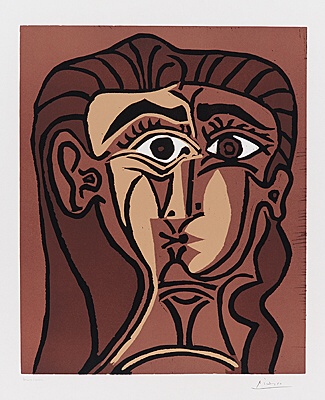
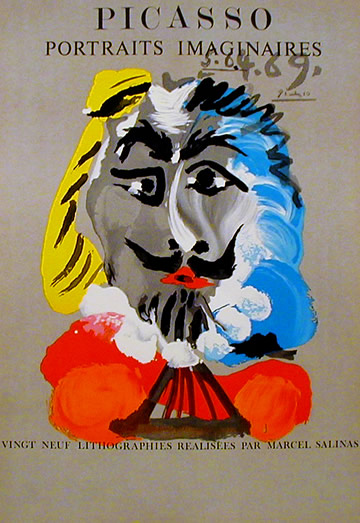
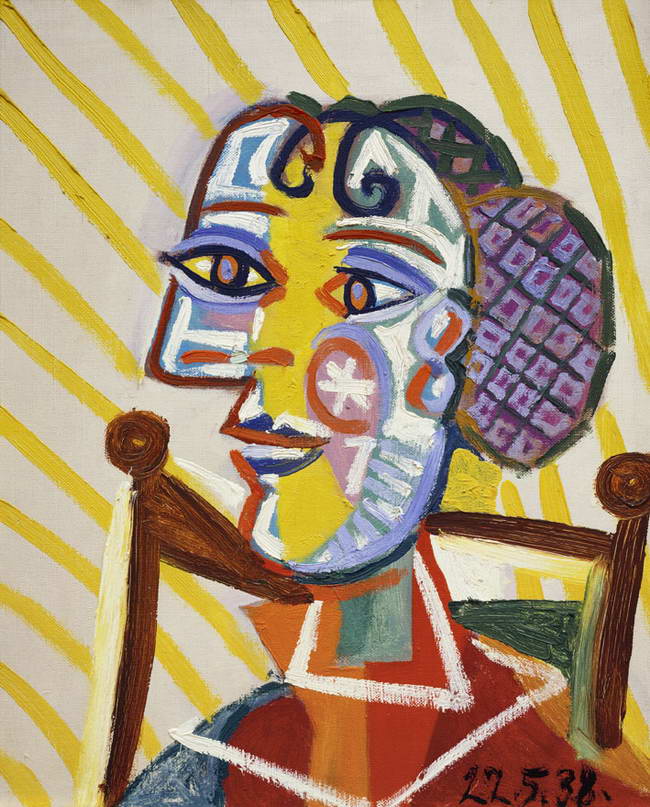
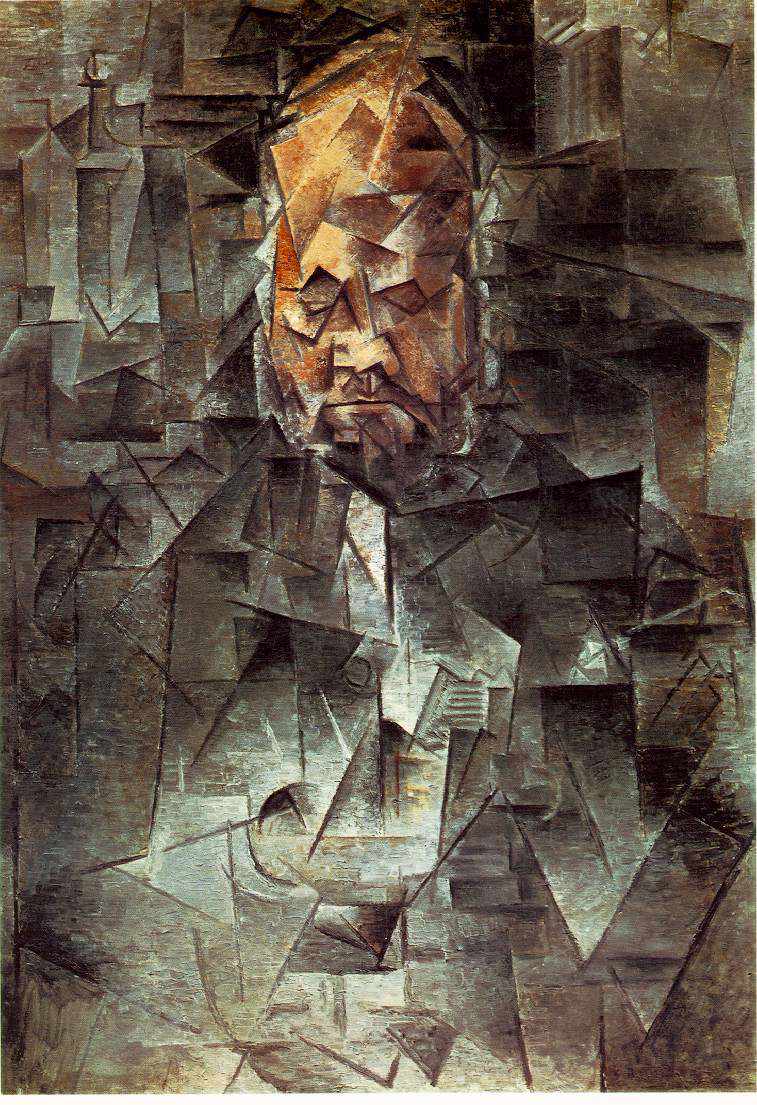
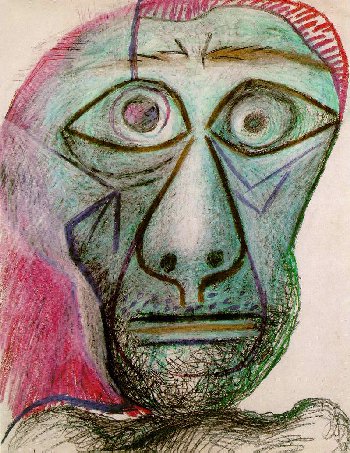
In a recent article entitled, Lifestyles of the 2008 Presidential Candidates - How Our Potential Presidents Live in Real Life, AOL Money and Finance (June 3, 2008), Democratic Presidential Candidate Barack Obama reveals that one of his ''personal heroes' is famous Spanish Surrealist artist Pablo Picasso.
According to the Metropolitan Museum of Art in New York, "The artistic genius of Pablo Picasso (1881–1973) has impacted the development of modern and contemporary art with unparalleled magnitude. His prolific output includes over 20,000 paintings, prints, drawings, sculptures, ceramics, theater sets and costumes that convey a myriad of intellectual, political, social, and amorous messages. His creative styles transcend realism and abstraction, Cubism, Neoclassicism, Surrealism, and Expressionism." See Pablo Picasso (1881–1973) at: http://www.metmuseum.org/TOAH/HD/pica/hd_pica.htm .


Similarly, Encyclopedia Britannica reflects that,


"Although Picasso never became an official member of the group, he had intimate connections with the most important art movement between the two world wars, Surrealism. The Surrealist establishment, including its main propagandist, André Breton, claimed him as one of their own, and Picasso's art gained a new dimension from contact with his Surrealist friends...

... Life and career » Surrealism


Although Picasso never became an official member of the group, he had intimate connections with the most important art movement between the two world wars, Surrealism. The Surrealist establishment, including its main propagandist, André Breton, claimed him as one of their own, and Picasso’s art gained a new dimension from contact with his Surrealist friends, particularly the
writers. Inherent in Picasso’s work since the Demoiselles were many elements that the official circle advocated. The creation of monsters, for instance, could certainly be perceived in the disturbing juxtapositions and broken contours of the human figure in Cubist works; Breton specifically pointed to the strange Woman in a Chemise (1913).


("In 1931, Universal Studios released the movie 'Frankenstein,' in which the monster as most of us recognise him today made his first appearance. The 1934 drawing appears to contain an inverted double portrait of Frankenstein's monster derived from this movie...

Picasso, who was often described as a monster, loved the cinema and probably saw the 1931 'Frankenstein' soon after its release in France. It appears clear from the drawing that he went on to identify a number of symbolic associations between himself and the monster and identified other symbolic associations between the monster and Hitler's Aryan Superman. Frankenstein's monster, like Oedipus and Picasso, were all in a sense responsible for the destruction of their fathers*. All three also Picasso symbolically, Oedipus by self infliction and suffered a form of blindness; Frankenstein's monster because at first his eyes were too sensitive to light. All three also underwent a form of crucifixion; Picasso symbolically, Oedipus when he is exposed by his father, the monster when he is created as well as when he dies under the sign of a burning cross. Finally, all three also experienced a form of exile; Picasso at the turn of the century in Paris and again in the 1930's as a protest against Franco, Oedipus by his own edict and the monster by being violently ostracised from the day of his creation." See Mark Harris, The Picasso Conspiracy, Symbolism in the 1934 Drawing - Frankenstein, at: http://web.org.uk/picasso/toc.html http://web.org.uk/picasso/symbolism.html http://web.org.uk/picasso/frankenstein.html ).


[IS GLOBAL WARMING SUCH A MONSTER??]


Moreover, the idea of reading one thing for another, an idea implicit in Synthetic Cubism, seemed to coincide with the dreamlike imagery the Surrealists championed.


What the Surrealist movement gave to Picasso were new subjects—especially erotic ones—as well as a reinforcement of disturbing elements already in his work...the effect of distortion on the emotions of the spectator can also be interpreted as fulfilling one of the psychological aims of Surrealism (drawings and paintings of the Crucifixion, 1930–35).


In the 1930s Picasso, like many of the Surrealist writers, often played with the idea of metamorphosis.

For example, the image of the minotaur, the monster of Greek mythology—half bull and half human—that traditionally has been seen as the embodiment of the struggle between the human and the bestial, becomes in Picasso’s work not only an evocation of that idea but also a kind of self-portrait.


Finally, Picasso’s own brand of Surrealism found its strongest expression in poetry. He began writing poetry in 1934, and during one year, from February 1935 to the spring of 1936, Picasso virtually gave up painting. Collections of poems were published in Cahiers d’Art (1935) and in La Gaceta de Arte (1936, Tenerife), and some years later he wrote the Surrealist play Le Désir attrapé par la queue (1941, Desire Caught by the Tail).


...After the war Picasso resumed exhibiting his work, which included painting and sculpture as well as work in lithography and ceramics. At the Autumn Salon of 1944 (“Salon de la Liberation”) Picasso’s canvases and sculpture of the preceding five years were received as a shock. This plus the announcement that Picasso had just joined the Communist Party led to demonstrations against his political views in the gallery itself...


... Because Picasso’s art from the time of the Demoiselles was radical in nature, virtually no 20th-century artist could escape his influence. Moreover, while other masters such as Matisse or Braque tended to stay within the bounds of a style they had developed in their youth, Picasso continued to be an innovator into the last decade of his life."


See: Pablo Picasso, Surrealism, at Encyclopædia Britannica.com at: http://www.britannica.com/eb/article-59635/Pablo-Picasso ; and
http://www.britannica.com/EBchecked/topic/459275/Pablo-Picasso .