"Chicago 10 is a 2007 partly animated film written and directed by Brett Morgen and tells the story of the Chicago Seven. The film features...an animated reenactment of the trial based on transcripts and rediscovered audio recordings. It also contains archive footage of [ANTI-WAR RADICALS] David Dellinger, Abbie Hoffman, William Kunstler, Jerry Rubin, Bobby Seale, and Leonard Weinglass, and of the protest and riot itself. The title is drawn from a quote by Rubin, who said, 'Anyone who calls us the Chicago Seven is a racist. Because you're discrediting Bobby Seale. You can call us the Chicago Eight, but really we're the Chicago Ten, because our two lawyers went down with us.'" http://en.wikipedia.org/wiki/Chicago_Seven
 "The Chicago Seven were seven (originally eight, when they were known as the Chicago Eight) defendants charged with conspiracy, inciting to riot and other charges related to protests that took place in Chicago, Illinois on the occasion of the 1968 Democratic National Convention...The 1968 Democratic National Convention, held in late August – convened to select the party's candidates for the November 1968 Presidential election – was the scene of massive demonstrations protesting the Vietnam War, which was at its height. Thousands of people showed up with signs and banners, music, dancing and poetry."
"The original eight protester/defendants, indicted by the grand jury on March 20, 1969, were Abbie Hoffman, Jerry Rubin, David Dellinger, Tom Hayden, Rennie Davis, John Froines, Lee Weiner, and Bobby Seale. The defense attorneys were William Kunstler and Leonard Weinglass of the Center for Constitutional Rights. The judge was Julius Hoffman. The prosecutors were Richard Schultz and Tom Foran. The trial began on September 24, 1969, and on October 9 the United States National Guard was called in for crowd control as demonstrations grew outside the courtroom. Early in the course of the trial, Black Panther Party activist Bobby Seale hurled bitter attacks at Judge Hoffman in court, calling him a "fascist dog," a "pig," and a "racist," among other things. Seale had wanted the trial postponed so that his own attorney, Charles Garry, could represent him (as Garry was about to undergo gallbladder surgery); the judge denied the postponement, and refused to allow Seale to represent himself, leading to Seale's verbal onslaught. When Seale refused to be silenced, the judge ordered Seale bound and gagged in the courtroom, citing a precedent from the case of Illinois v. Allen. (This was alluded to in Graham Nash's song, 'Chicago', which opened with: 'So your brother's bound and gagged, and they've chained him to a chair'). Ultimately Judge Hoffman severed Seale from the case, sentencing him to four years in prison for contempt, one of the longest sentences ever handed down for that offense in American history at that time."
"...On February 18, 1970, all seven defendants were found not guilty of conspiracy, two (Froines and Weiner) were acquitted completely, and five were convicted of crossing state lines with the intent to incite a riot. Those five were each sentenced to five years in prison and fined $5,000 on February 20, 1970...All of the convictions were reversed by the United States Court of Appeals for the Seventh Circuit on November 21, 1972, on the grounds of bias by the judge and his refusal to permit defense attorneys to screen prospective jurors for cultural and racial bias (Case citation 472 F.2d 340). The Justice Department decided not to retry the case. During the trial, all the defendants and both defense attorneys had been cited for contempt and sentenced to jail, but all of those convictions were also overturned. The contempt charges were retried before a different judge, who found Dellinger, Rubin, Hoffman and Kunstler guilty of some of the charges, but opted not to sentence the defendants to jail or fines. Of the eight police officers indicted in the matter, seven were acquitted, and charges against the eighth were dismissed."
-------------------------------------------------------------------------------------------------
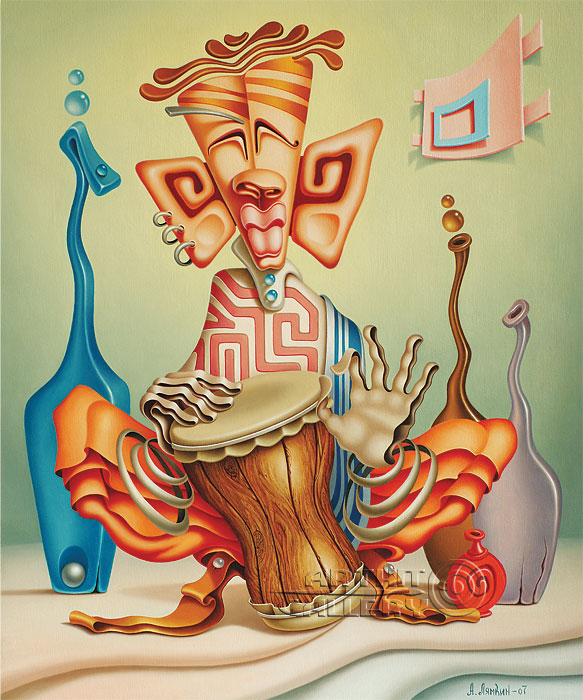
[THE FOLLOWING ENTRY REFLECTS ASPECTS OF SURREALISM INSOFAR AS 'ART IMITATES LIFE, WHICH IMITATES ART...]
In his 'mash-up documentary' Chicago 10, Brett Morgen wants to erase the distance between 1968 and 2008
By JR Jones
Chicago Reader
February 28, 2008
"As a Chicagoan in my early 40s, I find that the 1968 Democratic convention and the ensuing conspiracy trial are at my fingertips yet far beyond my grasp...Chicago 10, an electrifying new 'mash-up documentary' by Brett Morgen, vividly reconstructs the battles on the street and in the courtroom, and it couldn’t come at a more opportune moment...Then as now, a big-hatted Texan had led the country into an ill-considered war and was about to shuffle off into history with U.S. forces still mired in a foreign civil conflict. Then as now, the Democratic Party was embroiled in a hotly contested presidential race, with two antiwar upstarts, Eugene McCarthy and Robert Kennedy, vying for the nomination against Vice President Hubert Humphrey. If Barack Obama and Hillary Clinton continue to duke it out through the summer, this year’s Democratic convention could be the most chaotic since then. (Coincidentally the gathering, scheduled for August 25 through 28 in Denver, will precisely mark the 40th anniversary of Chicago’s four days of violence.)"
"The 1968 convention changed the city, the Democratic Party, and the nation. The overkill on Michigan Avenue may be a source of shame now, but at the time a majority of Americans supported the first Mayor Daley and the police for cracking down on protesters. After more than a decade of civil rights demonstrations, antiwar marches, and rioting in U.S. cities, the political pendulum had begun to swing back to the right, and Richard Nixon rode it straight into the Oval Office with a campaign that promised to restore law and order to the country. The bloodshed in Chicago also fractured the American left into a liberal wing that still believed in nonviolence and a radical wing that resolved to pursue more aggressive tactics. With Humphrey’s defeat, the great era of American liberalism, which had started with Franklin Roosevelt’s election in 1932 and peaked with the Voting Rights Act of 1965, began its long, steep decline."
"...The Democrats are still feeling the aftershocks of ’68 today. Back then, only 13 states held Democratic primaries, and Humphrey skipped them all, taking advantage of the party machinery to wrap up the nomination. That fueled the rage of the demonstrators, and as news of their being beaten and gassed filtered into the International Amphitheater, delegates approved a convention plank to reform the nominating process...After the landslide defeat of the liberal George McGovern in 1972 and Ted Kennedy’s failed 1980 primary challenge to President Carter, whom Ronald Reagan easily defeated that November, party centrists struck back by creating unelected, uncommitted “superdelegates” to check the insurgents. Superdelegates helped shut down Gary Hart, who ran against establishment candidate Walter Mondale in 1984, and they may yet do the same to Barack Obama. For Chicago, the convention is a stain that will never wash away. The second Mayor Daley brought the Dems back in 1996, neatly contained pesky protesters at sanctioned demonstration sites, and smoothly orchestrated Bill Clinton’s coronation as the uncontested nominee—yet just the words 'Democratic convention' still conjure images of cops busting heads and Richard J. Daley shouting at Senator Abraham Ribicoff after the senator took the convention podium to denounce “Gestapo tactics on the streets of Chicago.”
"...You won’t learn any of this from Chicago 10, because Morgen isn’t interested in measuring the distance between 1968 and 2008—he wants to erase it. When his movie opened the Sundance Film Festival a year ago, he told the audience his objective was to 'mobilize the youth in this country to stop the fucking war.' Archival footage shows the MC5 rocking out in Lincoln Park, but the music is Rage Against the Machine’s version of “Kick Out the Jams,” and other key moments feature tunes by Eminem or the Beastie Boys. Scenes of the conspiracy trial are drawn from court transcripts, but Morgen has dramatized them with motion-capture animation that turns yippie activists Hoffman and Rubin into freaky superheroes. 'The idea of ‘yippie’ was that politics needed to be fun,' Morgen told USA Today. 'If you want to mobilize people, it’s not fun just walking around with a placard over your head. Turn it into a party, turn it into a concert—and that’s what they did.'”
------------------------------------------------------------------------------------------------
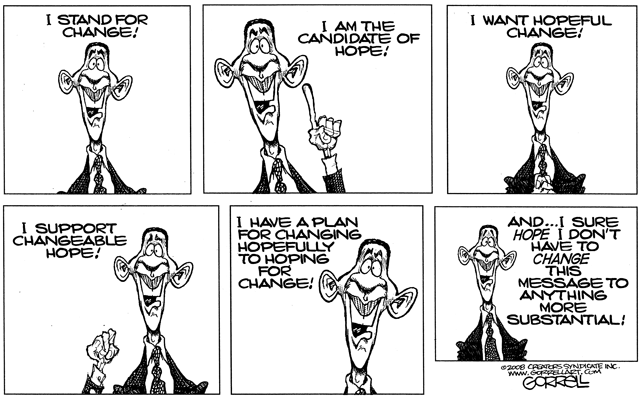
[THE FOLLOWING LISTSERV REFLECTS FORMER UNIVERSITY OF CHICAGO CONSTITUTIONAL LAW PROFESSOR BARACK OBAMA'S EFFORTS TO TAP INTO & INCITE ANTI-WAR EMOTIONS THROUGH CAREFUL INDIRECT REFERENCES TO & INNUENDOS ABOUT THE IRAQ WAR].
"After graduating from Harvard Law School, and serving as president of the Harvard Law Review, Obama taught at the University of Chicago Law School for about a decade, and I know him from his time as a colleague here."
The Right is Terrified of Obama, citing University of Chicago Law Professor Cass Sunstein
By Harold Henderson
The Daily Harold
September 25, 2006
-------------------------------------------------------------------------------------------------
Marxism mailing list archive
To: Marxmail marxism@xxxxxxxxxxxxxxxxxxx>
Subject: [Marxism] How Barack Obama and MoveOn support Senator Byrd
From: lshan lshan@xxxxxxx>
Date: Tue, 29 Mar 2005 11:53:33 -0500
Subject: [Marxism] How Barack Obama and MoveOn support Senator Byrd
From: lshan lshan@xxxxxxx>
Date: Tue, 29 Mar 2005 11:53:33 -0500
"I just received a message from MoveOn calling for support to Senator Robert Byrd of West Virginia for his opposition to the Iraq War. Eli Pariser quotes Byrd as follows: 'I truly must question the judgment of any President who can say that a massive unprovoked military attack on a nation which is over 50% children is 'in the highest moral traditions of our country.' This war is not necessary at this time.' Byrd's position is for getting the UN in and the U.S. out. However, unlike Kerry, he did vote against the $87 billion appropriate in October 2003."
Most interesting is Barack Obama's letter of support. Obama does not have a single word about Byrd's opposition to the invasion and occupation of Iraq. His skillful reference to Byrd's opposition to the invasion and occupation of Iraq consists of:
'He [Byrd] has spoken out passionately against a Bush foreign policy that has alienated our allies throughout the world.'
Thus Obama connects to the antiwar opposition through MoveOn and Senator Robert Byrd, while never stating opposition to Iraq invasion and occupation for himself."
However, at one time, Obama posted the following on his web site:
"I don't oppose all wars ... What I am opposed to is a dumb war. What I am opposed to is a rash war. What I am opposed to is the cynical attempt by Richard Perle and Paul Wolfowitz and other arm-chair, weekend warriors in this Administration to shove their own ideological agendas down our throats, irrespective of the costs in lives lost and in hardships borne...What I am opposed to is the attempt by political hacks like Karl Roves to distract us from a rise in the uninsured, a rise in the poverty rate, a drop in the median income ... to distract us from corporate scandals and a stock market that has just gone thru the worst month since the Great Depression...That's what I'm opposed to. A dumb war. A rash war. A war based not on reason but on passion, not on principle but on politics .... "
That apparently was enough for Obama. On June 5, 2003, Chicago activist and writer Bruce Dixon noted:
"For a while the whole speech could be found on Obama's campaign web site, a key statement of principle for a serious US Senate candidate in an election season when the President's party threatens the world with permanent war and pre-emptive invasion, and cows US citizens with fear mongering, color coded alerts, secret detentions and the abrogation of constitutional liberties. Although Obama may have appeared at meetings of other citizens opposed to the war or let them use his name, no further public statements from the candidate on these important issues have appeared."
"Then, a few weeks ago, Barack Obama's heartfelt statement of principled opposition to lawless militarism and the rule of fear was stricken without explanation from his campaign web site, and replaced with mild expressions of 'anxiety'. 'Dixon quotes the 'new' Obama from Obama's website:
'But I think [people are] all astonished, I think, in many quarters, about, for example, the recent Bush budget and the prospect that, for example, veterans benefits might be cut. And so there's discussion about that, I think, among both supporters and those who are opposed to the war. What kind of world are we building?' And I think that's - the anxiety is about the international prospects and how we potentially reconstruct Iraq. And the costs there, then, tie in very directly with concerns about how we're handling our problems at home."
Dixon comments: "His passion evaporated, a leading black candidate for the US Senate mouths bland generalities on war, peace and the US role in the world. Barack Obama, professor of constitutional law, is mum on the Patriot Act, silent about increased surveillance of US citizens, secret searches, and detentions without trial. His campaign literature and speeches ignore Patriot Act 2, which would detain US citizens without trial, strip them of their nationality and deport them to - wherever, citizens of no nation."
from Brian Shannon
------------------------------------------------------------------------------------------------
Columbia University Professor Louis Proyect
(February 2002)
[LOUIS PROYECT HAS BEEN QUOTED IN WIKIPEDIA AS MAKING THE FOLLOWING STATEMENT: "The answer to global warming is in the abolition of private property and production for human need. A socialist world would place an enormous priority on alternative energy sources. This is what ecologically-minded socialists have been exploring for quite some time now." Louis Proyect, Columbia University] See: http://en.wikiquote.org/wiki/Global_warming .
"Surrealist leader and poet André Breton was a life-long Trotskyist...Surrealism emerged in the aftermath of WWI. Along with the Dadaism that prepared the way for it, it was a rejection of bourgeois values, especially the rationalism that supposedly accounted for the wholesale destruction of life and property just concluded. It attacked the pretensions of high art, while retaining many of the painterly flourishes of earlier generations. When Marcel Duchamp painted a moustache on the Mona Lisa in the Dadaist "L.H.O.O.Q" in 1919, he captured the spirit of this movement. In many ways, it was to the radicalization of the 1920s as people like Abby Hoffman and the Fugs were to the 1960s radicalization."
"While Surrealist painting tended to avoid any obvious engagement with the class struggle, the writers were deeply involved with radical politics. Breton and Louis Aragon were prominent CP [Communist Party] intellectuals. As the Stalin-Trotsky fight divided poets as well as activists, Aragon became an apologist for Stalin, while Breton chose Trotskyism. Trotsky, who saw proletarian art and socialist realism as inimical to the goals of the 1917 revolution, found a natural ally in Breton and wrote a manifesto for artistic freedom that Breton circulated under his own name. Even if Surrealist fiction and poetry had the same cloistered and solipsistic quality as the paintings, Breton and others issued thousands of proclamations taking positions on the Spanish Civil War and other burning questions."
["I CHANGE"]


"Reflecting the multifaceted character of the 1960s radicalization, and long before it "corrected" itself with the turn toward industry, the American Trotskyist movement published Franklin Rosemont's Breton collection titled "What is Surrealism: Selected Writings". Along with books like Frank Kofsky's "Black Nationalism and the Revolution in Jazz," it was a short-lived bid by a sectarian group to show that it was hip. No such pretensions exist nowadays."
"...'Of contemporary psychology, surrealism retains that which tends to give a scientific basis to research into the origin and mutation of ideological images. In this sense it has attached a particular importance to Freud's investigations into the processes of dreaming and, more generally, to all of Freud's work which is the clinically based exploration of unconscious life.' While the Marxist elements of surrealism remained underdeveloped, Freud's "insights" informed nearly everything that both the writers and painters produced. It is important to understand that surrealism did not take a literal-minded and clinical approach to Freud's theories. For the most part, it did not look at psychoanalysis as a means to achieving mental health, something largely unattainable in bourgeois society in any case. Instead, they saw it as a way of tapping into the deep psychic reservoirs that can produce memorable art. More to the point, mental illness--and hysteria in particular--was a normal response to the insanity of capitalist society. Their notions on this relationship anticipated not only R.D. Laing but the postmodernism of Deleuze-Guattari and Lacan."
-------------------------------------------------------------------------------------------------
Surrealism in the United States
By Columbia University Professor Louis Proyect
October 27, 2002
"A few months ago I posted an article about []Surrealism, Freud and Trotsky []
(http://www.columbia.edu/~lnp3/mydocs/culture/breton.htm) that relied heavily on Franklin Rosemont's collection of Andre Breton's writings titled "What is Surrealism."
(http://www.columbia.edu/~lnp3/mydocs/culture/breton.htm) that relied heavily on Franklin Rosemont's collection of Andre Breton's writings titled "What is Surrealism."
"This Pathfinder book belongs on the shelf of anybody who is interested in the intersection between revolutionary politics and avant-garde art and literature. Now thanks to Autonomedia Press (and especially editor Jim Fleming--a Marxmail subscriber who sent me a review copy), we have a volume that belongs on the same shelf. I refer to []Surrealist Subversions: Rants, Writings and Images by the Surrealist Movement in the United States.[] Edited and introduced by Ron Sakolsky, this volume contains articles that originally appeared in the journal of Rosemont's Chicago Surrealist Group titled [] Arsenal/Surrealist Subversion,[] and kindred publications."
"In my first article, I mentioned that surrealism had taken root in the USA in the 1940s largely through the auspices of a magazine titled VVV. Among the editors was Martinique poet and playwright Aimé Césaire who articulated a surrealist version of Black Nationalism that influenced many black intellectuals, including esteemed contemporary African-American historian Robin D.G. Kelley whose articles can be found in [] Surrealist Subversions.[] Another editorial board member at VVV was Philip Lamantia, who was to become best known as a leading figure of the new poetry of the 1940s and 50s that included the beats and the San Francisco Renaissance writers. It would not be much of a stretch to argue that Lamantia represents a link in the chain between the counter-culture of the 1930s and that of the 1960s. He eventually hooked up with Arsenal, along with fellow beat poet and African-American Ted Joans. It is also not too far of a stretch to see Rosemont's journal as constituting a link between the an important sector of the contemporary radicalization that began in the 1960s with earlier strands going back to the 1930s and earlier, with the left wing of the beat generation constituting an important bridge between the two epochs."
"Ron Sakolsky's introduction does a fine job of identifying both the importance of Franklin Rosemont in keeping the surrealist tradition alive and the particular circumstances of his conversion to this radical cultural movement that will be instantly recognizable to anybody from the generation of baby boomers who rejected everything that American consumerism stood for."
"... Among the most intriguing articles in Rosemont's collection is Robin D.G. Kelley's []Freedom Now Sweet: Surrealism and the Black World.[] His recently published "Freedom Dreams: The Black Radical Imagination" expands on many of the themes first found in this 1998 lecture delivered at the U. of North Carolina. Kelley says:
"'Surrealism may have originated in the West, but it is rooted in a conspiracy against Western Civilization. Surrealists frequently looked outside of Europe for ideas and inspiration, turning most notably to the "primitives" under the heel of European colonialism. Indeed, what later became known as the Third World turned out to be the source of the surrealists' politicization during the mid-1920s. The Paris Surrealist Group and the extreme left of the French Communist Party were drawn together in 1925 by their support of Abd-el-Krim, leader of the Rif uprising against French colonialism in Morocco. In tracts like "Revolution Now and Forever!" the surrealists actively called for the overthrow of French colonial rule. That same year, in an "Open Letter" to writer and French ambassador to Japan, Paul Claudel, the Paris group announced: "We profoundly hope that revolutions, wars, colonial insurrections, will annihilate this Western civilization whose vermin you defend even in the Orient." Seven years later, the Paris group produced its most militant statement on the colonial question to date. Titled "Murderous Humanitarianism" (1932) and drafted mainly by Rene Crevel and signed by (among others) André Breton, Paul Eluard, Benjamin Péret, Yves Tanguy, and the Martinican surrealists Pierre Yoyotte and J. M. Monnerot, it was first published in Nancy Cunard's massive anthology, Negro (1934), and recently reprinted in the "Surrealism: Revolution Against Whiteness" issue of the journal Race Traitor. The document is a relentless attack on colonialism, capitalism, the clergy, the Black bourgeoisie, and hypocritical liberals. Arguing that the very humanism upon which the modern West was built also justified slavery, colonialism and genocide, they called for action: "we surrealists pronounced ourselves in favor of changing the imperialist war, in its chronic and colonial form, into a civil war. Thus we placed our energies at the disposal of the revolution, of the proletariat and its struggles, and defined our attitude towards the colonial problem, and hence towards the color question.'"
"...Although Richard Wright's "Native Son" has most often been associated with the proletarian novel of the 1930s, Kelley makes a convincing case that surrealism was also a strong influence on the African-American author and CP'er. He notes that Wright discusses the importance of surrealism in his unpublished "Memories of My Grandmother," especially as an aid to understanding African American folk culture. He found the blues structure to be analogous to the surrealist's use of the "exquisite corpse," a term that captures the mystery of the chance encounter or what Breton called "objective chance." (Trotsky was never comfortable with this aspect of surrealist thought and told Breton, "Comrade Breton, your interest in phenomena of objective chance does not appear clear to me. Yes, I know well that Engels referred to this notion, but I ask myself if, in your case, it isn't something else. I am not sure you aren't interested in keeping open [his hands described a little space in the air] a little window on the beyond." For Kelley, the connections between surrealism and black culture revolve essentially around the imperative to reject Western Civilization, especially those aspects which lead to the annihilation of precapitalist society and beliefs either through forced cultural assimilation or through the open use of weapons of mass destruction, like the poison gas the Spanish government used against the Rif rebels in Morocco in the 1920s. Kelley writes:
"'Wright's engagement with surrealism seems to parallel that of many other Black intellectuals. They have found in surrealism confirmation of what they already know--for them it is more an act of recognition rather than a revolutionary discovery. Ted Joans wrote Breton that he "chose" surrealism because he recognized its fundamental ideas and camaraderie in jazz. Wifredo Lam said he was drawn to surrealism because he already knew the power of the unconscious having grown up in the Africanized spirit world of Santeria. Aime Cesaire insists it was surrealism that brought him back to African culture. In a 1967 interview he explained, "Surrealism provided me with what I had been confusedly searching for. I have accepted it joyfully because in it I have found more of a confirmation than a revelation." Surrealism, he explained, helped him to summon up powerful unconscious forces. "This, for me, was a call to Africa. I said to myself: it's true that superficially we are French, we bear the marks of French customs; we have been branded by Cartesian philosophy, by French rhetoric; but if we break with all that, if we plumb the depths, then what we will find is fundamentally Black.'"
"Since the Chicago Surrealist Group had such a strong orientation to black culture, helped no doubt by the Black Nationalist explosion of the 1960s, it should come as no surprise that their work overlapped to a considerable degree with the work of scholars associated with "Race Traitor," especially David Roediger who not only writes important scholarly examinations of the problem of racism in the working class like "The Wages of Whiteness" but who has contributed frequently to various journals in his capacity as a committed surrealist."
"...Although I agree with many of the insights found in this collection, I tend to differ on one important question. For Rosemont and his comrades, anarchism is attractive because it lacks the stodginess of the Leninist tradition. Since Lenin conceived of the revolutionary party as the political equivalent of the division of labor being introduced into the modern factory system, it is no wonder that a young radical like Rosemont might find this type of activism off-putting. For traditions such as anarchism, Toni Negri-style autonomism and Guy DeBord's Situationism, there is a strong tendency to see the organizational forms of today prior to the revolution as anticipating somehow the future classless society. For example, in the section titled "Dreaming Revolution," we find an article by Martha Sonnenberg titled "New Desires, New Revolutionary Potentials."
"'The development of movements of Black people, of women, of prisoners ms important to the potential of surrealism....They are living illustrations of how concepts which, at one point in time, exist only as ideal thoughts, can become real and materialized in people's lives. The destruction of old concepts of beauty, of reason and logic, of emotion, of sexuality, of age and time, and the creation of new ones in their places, is being accomplished by mass numbers of people. New definitions of human relationships and of human capacity, which surrealists in the 1920s and 30s were struggling for on a theoretical and artistic level, are being lived by people today. These movements are the realization of the potentials of the past, just as they create new potentials to be fulfilled in the future.'"
"Alas, I am afraid that this is far too much to expect from revolutionary politics. I tend to think of the revolutionary movement as the equivalent for our class of the vast array of institutions that govern and enforce the bourgeoisie's class rule, from the army to the CIA to the various think tanks that promote the inevitability of capitalism. One does not get involved with such outfits in order to have fun, but in order to advance the interests of the class you are loyal to. This is the function of the revolutionary party we need so desperately."